

Comfortable Loungewear for Weekend Relaxation That Still Looks Good
Last Updated: October 30, 2026
Quick Summary
Comfortable loungewear for weekend relaxation depends on fabric, fit, and construction working together. A soft cotton-blend knit that feels good on bare skin matters, but so do a waistband that does not dig in and seams that do not rub after an hour of sitting. Match the fabric weight to your room temperature and how long you plan to stay still.
- The Went Out Into the World Today… Nope Hoodie 18500 uses a 50% pre-shrunk cotton and 50% polyester blend.
- The Introverts Unite Hoodie 18500 includes 1 × 1 athletic rib-knit cuffs and waistband and a double-lined hood.
- Heavy fleece can trap heat once you settle in at home, so match fabric weight to room temperature.
- Ribbed cuffs with a little spandex keep sleeves in place when you lift a mug.
- Wash new loungewear once before judging the fabric, since some blends soften after the first wash.
Table of Contents
- What Makes Loungewear Actually Comfortable
- Loungewear vs Pajamas: Where the Line Is
- Choosing Fabrics by Season and Climate
- Finding a Fit You Can Wear All Day
- Loungewear That Looks Put Together Outside the House
- Loungewear Sets for Women: Matching Pieces for Weekend Days
- Building Your Weekend Lounge Look With Clothed in Kindness
- Frequently Asked Questions
What Makes Loungewear Actually Comfortable
Comfortable loungewear for weekend relaxation starts with fabric, fit, and construction working together. A soft cotton-blend knit that feels good against bare skin does little if the waistband digs in or the seams rub after an hour on the couch. The pieces worth keeping tend to balance all three.
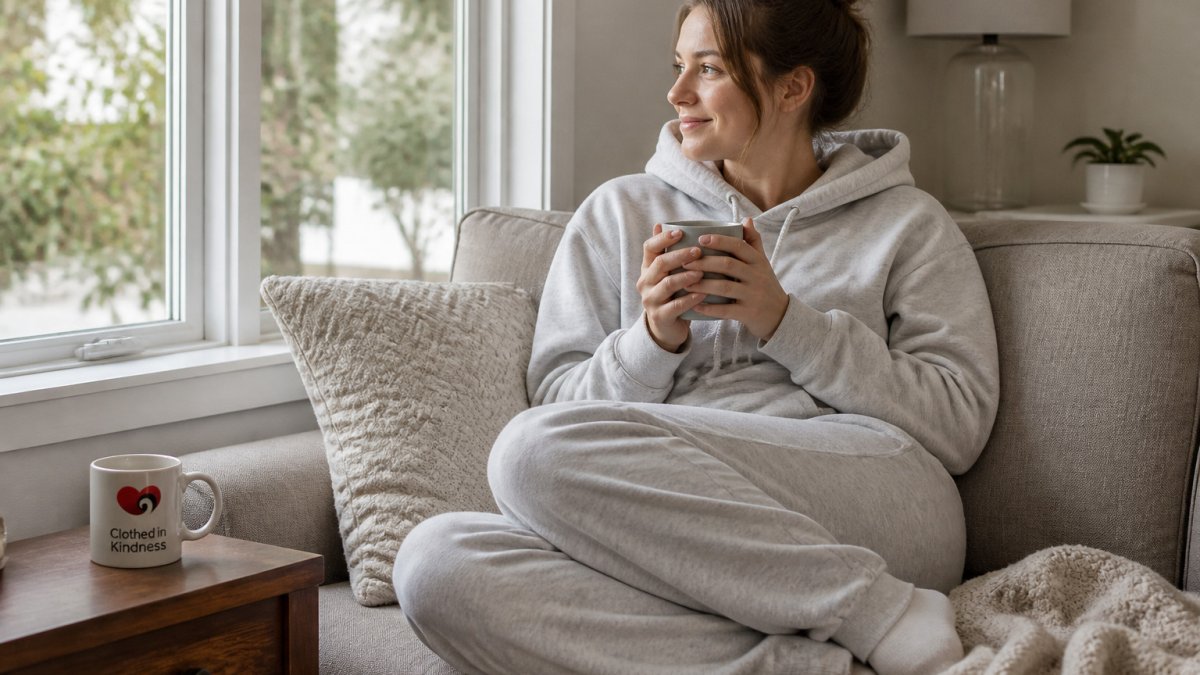
Fabric blend matters more than most shoppers expect when you're hunting for comfortable loungewear for weekend relaxation. The Went Out Into the World Today… Nope Hoodie 18500 uses a 50% pre-shrunk cotton and 50% polyester blend, with air-jet spun yarn that is designed to feel soft and reduce pilling. That combination suits a relaxed day at home as well as a quick run out the door.
Construction details separate comfortable loungewear from the merely cozy. The Introverts Unite Hoodie 18500 includes 1 × 1 athletic rib-knit cuffs and waistband, a double-lined hood, and a front pouch pocket.
Watch out: heavy fleece can feel warm and plush in a store, then trap heat once you settle in at home. Match the weight of the fabric to the room temperature and the time you plan to spend sitting still.
Loungewear vs Pajamas: Where the Line Is
Loungewear and pajamas overlap, but they serve different purposes. Pajamas are built for sleep and are usually made from lightweight, low-bulk fabrics that stay out of the way overnight. Loungewear is designed to be worn during waking hours, at home or on a casual outing, which means it should hold its shape and look intentional enough to answer the door or run an errand.
A practical test is whether you would be comfortable sending a quick text photo of yourself in the outfit. If the answer is yes, you have loungewear. If you would rather keep the camera off, the piece probably belongs in the sleep drawer.
The Went Out Into the World Today… Nope Sweatshirt 18000 is a classic-fit sweatshirt made from a 50% cotton, 50% polyester blend.
Choosing Fabrics by Season and Climate
Fabric choice should follow the weather outside and the temperature inside, and those two things often disagree. A heated apartment in January and a drafty house in April call for different weights even though both are technically winter. The most useful approach is to know the handful of fabrics that show up in loungewear, what each one does well, and where it falls short.
Cotton is the baseline. It breathes, it feels natural against skin, and it handles repeated washing without much fuss. On its own it can shrink and wrinkle, which is why most loungewear cotton is pre-shrunk or blended. A 100% cotton French terry is a good cool-weather choice if you run warm; a lightweight cotton jersey is better for summer.
Cotton-polyester blends are the workhorse of the category. A 50/50 blend like the one used in the Went Out Into the World Today… Nope Hoodie 18500 is a mid-weight option at 8.0 oz/yd², suited to a cool evening.
Modal and rayon (often labeled viscose) are plant-derived and drape softly. They feel cooler than cotton against the skin and are a strong pick for warm-weather lounging or for anyone who runs hot. The trade-off is care: modal can stretch out of shape if it is hung wet, and it usually wants a gentler wash cycle than cotton.
Fleece is the warmest common option, and it is where a lot of weekend purchases go wrong. Fleece-backed sweatshirts feel plush in the store and then trap heat once you are sitting still. They are great for a cold house or a drafty den and a bad idea for a 78-degree living room.
French terry occupies a useful middle ground. It has a smooth face and a looped back, so it is warmer than jersey but less insulating than fleece. It handles layering well and tends to hold its shape through repeated wear.
A few practical rules help narrow it down:
- If you sleep hot or live in a warm climate, lean toward cotton jersey, modal, or a lightweight blend.
- If your home runs cool or you lounge in a basement, a mid-weight French terry or fleece-backed piece earns its keep.
- If you want one piece to work across seasons, a 50/50 cotton-poly blend in a mid weight is the safest bet.
- Check the fabric weight on the product page when it is listed. A lightweight hoodie and a heavy-blend one feel like different garments, and matching weight to your actual room temperature is the simplest way to avoid buying something you wear twice.
One more consideration: care. Cotton and cotton blends are the most forgiving, machine wash cold, tumble low, and they hold up. Modal and rayon want cooler water and flat drying to keep their shape. Fleece benefits from being washed inside out to reduce pilling on the outer face. None of this is complicated, but matching the fabric to the care you will actually do matters more than most shoppers expect.
The fabrics that show up most in loungewear, and where each one works best:
Went Out Into the World Today… Nope — Hoodie 18500 →
| Fabric | Best for | Key difference |
|---|---|---|
| Cotton | Everyday wear | Breathes well; pre-shrunk or blended to limit shrinking |
| Cotton-polyester blend | Versatile year-round use | Mid-weight option that suits a cool evening; higher polyester share pills less |
| Modal or rayon | Warm weather or running hot | Feels cooler and drapes softly; needs gentler washing |
| Fleece | Cold houses and drafty dens | Warmest option; can trap heat in a warm room |
| French terry | Layering across seasons | Warmer than jersey, less insulating than fleece; holds its shape |
Finding a Fit You Can Wear All Day
Comfort depends on fit, and the best loungewear fits well enough to move in without feeling loose or sloppy. The tricky part is that "relaxed" and "oversized" are not the same thing, and the difference shows up about two hours into a movie marathon.
Start with the shoulders. On a hoodie or sweatshirt, the shoulder seam should sit near the end of your own shoulder, not hanging halfway down your arm.
Sleeves should reach your wrist bone without bunching at the cuff, and they should not slide down over your hands when you lift a mug. Ribbed cuffs with a little spandex help here; they hold their shape and keep the sleeve where you put it.
The waistband is where most loungewear fails. A waistband that digs in is worse than a slightly loose one, because you feel it every time you sit, bend, or lie down. Look for a ribbed or elastic waistband with some stretch rather than a flat, non-stretch band.
Hems matter too. A hem that pools at your ankles catches on your heels and drags on the floor. If you are short, check the inseam measurement on the product page rather than assuming a standard length will work. If you are tall, the same measurement tells you whether the hem will hit where you want it.
Clothed in Kindness apparel is produced to order, and sizing varies by garment. The size guides on the hoodie and sweatshirt product pages list length and width measurements in inches.
A few common fit problems and what to do about them:
- Restrictive waistband: size up, or look for a drawstring or ribbed band with more give.
- Sleeves too short: check the sleeve length measurement, not just the size label; sizing up helps but changes the body fit too.
- Overly long hem: check the inseam or body length; a petite or short option may fit better than sizing down.
- Shoulders too wide: a smaller size in a relaxed cut often fits better than a larger size in a slim cut.
- Neckline too tight: a double-lined hood or a wider crew neck gives more room without looking sloppy.
Relaxed does not have to mean oversized to the point of losing shape. The goal is a fit that lets you reach, sit, and stretch without thinking about it, and that looks intentional when you stand up to answer the door.
Loungewear That Looks Put Together Outside the House
Loungewear that looks put together is about coordinated color, clean lines, and a few deliberate details. Pair a relaxed hoodie with fitted joggers or a matching bottom, and the outfit reads as chosen rather than accidental. Keep the palette tight, two or three colors at most, and the look stays polished for a quick grocery run or a casual coffee date.
The Jinx, You Owe Me a Coke Hoodie 18500 adds a playful, nostalgic note to an outfit.
Loungewear Sets for Women: Matching Pieces for Weekend Days
Matching loungewear sets simplify weekend dressing. A coordinated top and bottom removes the guesswork and gives you a finished look without extra effort. Sets also make it easier to build a small, versatile wardrobe, since each piece mixes well with other items you own.
When shopping for a set, check that both pieces share the same fabric blend and weight so they wash and wear at the same rate. Pay attention to the bottom's waistband and leg opening, since comfort in a set depends on both halves fitting well.
Building Your Weekend Lounge Look With Clothed in Kindness
A complete weekend look starts with one comfortable base layer and builds from there. Choose a soft top with a fit you trust, add bottoms that coordinate, and finish with a layer for cooler moments. Clothed in Kindness designs its apparel around the idea that clothing can reflect your personality, so the statement piece in your outfit can be as playful or as quiet as you want.
For a cozy, everyday option, browse the hoodies and sweatshirts collection and find a style that fits your routine. Clothed in Kindness apparel sounds like you, and a relaxed weekend is a good place to let it speak.
Frequently Asked Questions
What should I look for in comfortable loungewear?
Start with the fabric. Cotton-polyester blends are common in loungewear because they combine the softness of cotton with the shape retention of polyester. Check the fabric weight, which is listed in ounces per square yard on many product pages, since a heavier weight feels sturdier and warmer. Look at the neckline, waistband and seams too, because those are the spots that dig in or chafe after a few hours. Finally, review the size guide for the specific garment before ordering, since fit varies from piece to piece.
What is the difference between loungewear and pajamas?
Pajamas are designed for sleeping and usually have a looser, more sleep-focused cut. Loungewear is built to be worn during the day, both at home and for quick errands. The overlap is real, but if you want something you can wear from morning coffee through an afternoon out, loungewear is the better choice.
Can loungewear look put together enough to wear outside?
Yes, especially when the pieces match. Choose a heavier fabric with a clean silhouette for outings, and keep sleep-style prints for home. The goal is a look that feels relaxed but deliberate, which works well for errands, casual meetups or travel days.
How should loungewear fit for all-day comfort?
All-day loungewear should fit relaxed through the body and shoulders without being so loose that fabric bunches. Check the length and width measurements in the size guide on the product page rather than relying only on your usual size, because fit varies by garment. Ribbed cuffs and waistbands with a little stretch hold their place better during long days. If you plan to sit, drive or walk a lot, prioritize room through the hips and thighs.
