

Custom Art Sweatshirt Printing Options Compared
Last Updated: November 11, 2026
Quick Summary
Custom art sweatshirt printing options compared come down to how the ink sits on the fabric, how the print handles stretch and washing, and how much detail your design needs. Screen printing suits bold, flat graphics, while direct to film, or DTF, transfers a design from a clear film with heat and adhesive. Check your artwork and size before ordering.
- Sweatshirts have thicker fleece and larger front panels than tees, so the print method changes how the piece feels and washes.
- Screen printing pushes ink through a stencil onto the fabric one colour at a time.
- Direct to film prints the design onto clear film, then transfers it to the garment with heat and adhesive.
- Make sure artwork is at the exact print size, and ask for a higher-resolution or vector file if you only have a small screenshot.
- Check the size guide before finalising artwork, since printable measurements run from S to 5XL.
Table of Contents
- Why Printing Method Matters More on a Sweatshirt Than a Tee
- Screen Printing vs Direct to Film: How the Two Methods Differ
- How to Prepare Art Files for Apparel Printing
- Choosing the Best Fabric for Custom Graphic Sweatshirts
- Print Area, Placement, and Design Size Limits
- Feel, Durability, and Washing: What to Expect Over Time
- Pick the Sweatshirt Shown in Our Current Collection That Fits Your Design
- Frequently Asked Questions
Why Printing Method Matters More on a Sweatshirt Than a Tee
A sweatshirt is a different canvas from a tee. The fleece is thicker, the knit is looser, and the front panel is usually larger, so the print method you choose affects how the finished piece feels, washes and holds its colour. This guide compares the main printing approaches so you can match the method to your artwork and how you plan to wear the piece.
Custom art sweatshirt printing options compared come down to three questions: how the ink sits on the fabric, how the print handles stretch and washing, and how much detail your design needs. A bold, flat graphic and a photo-like illustration can both look good on a sweatshirt, but they rarely call for the same method.
Screen Printing vs Direct to Film: How the Two Methods Differ
Screen printing is a general technique that pushes ink through a stencil onto the fabric, one colour at a time. Direct to film, often shortened to DTF, is a general technique that prints the design onto a clear film and then transfers it to the garment with heat and adhesive.
How to Prepare Art Files for Apparel Printing
Before you send a file, check the following:
- The artwork is at the exact print size, not scaled up later
- Colours are converted to the colour mode your printer asks for
- Thin lines and small text are large enough to stay legible
- Any background you do not want printed is removed
Watch out: if a design only exists as a small screenshot, ask whether a higher-resolution or vector version is available before you pay for a print run.
Choosing the Best Fabric for Custom Graphic Sweatshirts
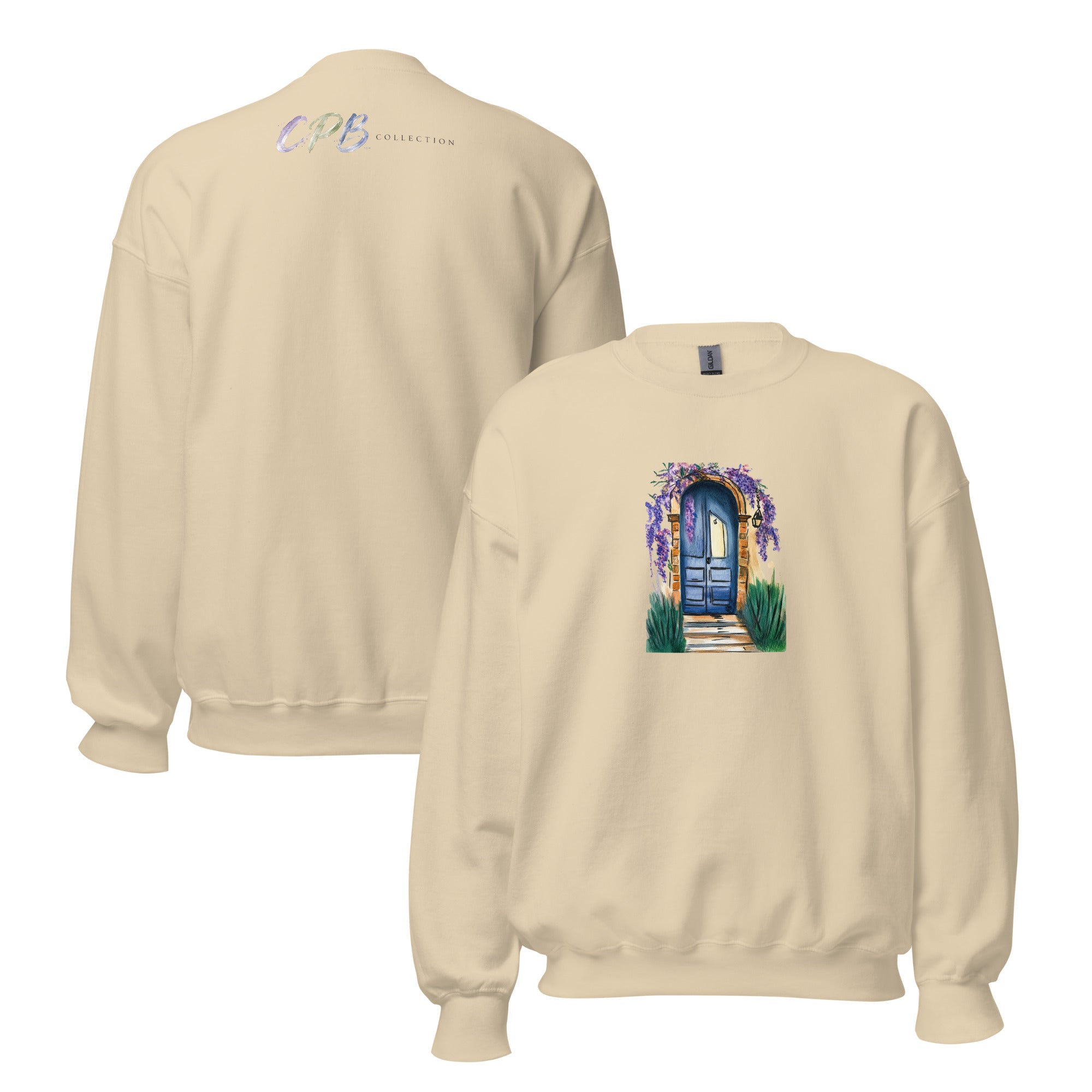
The fabric shapes how the print looks and feels. Our Door, Hummingbird and Honeybee sweatshirts are 50% cotton and 50% polyester, pre-shrunk, with a classic fit, a 1x1 athletic rib knit collar with spandex, and air-jet spun yarn for a soft feel. Double-needle stitching runs along the collar, shoulders, armholes, cuffs and hem.
The fabric has a soft feel, but the colour can shift slightly depending on the garment. On our Hummingbird and Honeybee listings, the Orange variant shows a subtle hue change with lighting, and the White variant can look off-white rather than bright white. Plan your colours with that in mind, especially if the design depends on an exact shade.
Print Area, Placement, and Design Size Limits
The size guide for these styles runs from S (27 inches length, 20 inches width) up to 5XL (34 inches length, 34 inches width).
The size guide for these styles sets the printable range, so check the measurements before you finalise your artwork.
| Size | Length | Width |
|---|---|---|
| S | 27 inches | 20 inches |
| 5XL | 34 inches | 34 inches |
Feel, Durability, and Washing: What to Expect Over Time
The part of a print you touch with your hand is the part most buyers never think to ask about until they are holding the finished sweatshirt. Printers talk about this as the "hand" of a print: how much the graphic changes the fabric under your fingers. It is worth understanding before you choose a method, because two prints that look identical in a product photo can feel very different when you wear them.
Pick the Sweatshirt Shown in Our Current Collection That Fits Your Design
Once you know which printing method suits your artwork, the next step is choosing a garment that fits your design and your plans for it. Our Door sweatshirt carries a design built around an open heart and a welcoming invitation. The Hummingbird sweatshirt is a gentle reminder that life's greatest moments are often the quietest ones, and the Honeybee sweatshirt is built around the idea that kindness does not have to be loud to make a difference. The Neener Neener sweatshirt brings back playful, nostalgic confidence, and Curiosity Before Judgement is a gentle reminder to make space for understanding before forming an opinion.
Clothed in Kindness sweatshirts are produced to order, so it is worth checking the size guide for the exact style before you buy. Browse the current Clothed in Kindness collection to find the sweatshirt that best matches the graphic you have in mind.
Frequently Asked Questions
What is the difference between screen printing and direct to film for sweatshirts?
Screen printing pushes ink through a mesh stencil, one color at a time, and tends to suit larger runs with a few solid colors. Direct to film prints the full design onto a transfer film that is then heat-pressed onto the garment, which handles many colors and fine gradients without separate screens. The tradeoff is hand: screen printed ink sits in the fabric and feels softer, while a DTF transfer adds a thin layer you can feel on the surface. Compare how each finish feels on a sample before committing to a larger order.
How should I prepare my art file for a custom sweatshirt?
Send vector artwork when you can, since it scales to any print size without losing edges. If your design is a photo or painted image, use the highest resolution you have and export it at the exact print size you need. Remove any background you do not want printed, and check colors against the printer's options before you finalize. A clean, high-resolution file prevents soft edges and muddy color on the finished sweatshirt.
What fabric works best for a custom graphic sweatshirt?
The Sweatshirt 18000 styles in the Clothed in Kindness collection are 50% cotton and 50% polyester, pre-shrunk, with a classic fit and an air-jet spun yarn for a softer feel. Review the size guide for the specific garment before ordering, because fit varies by style and size.
