

Turn Your Art Into Wearable Art: A Complete Guide
Last Updated: October 22, 2026
Quick Summary
To turn art into wearable art, digitize your artwork by scanning it at 300 DPI or higher, prepare the digital file in a compatible format like PDF or JPEG, then upload it to a print-on-demand service or use a printing method like heat transfer, direct-to-garment, or screen printing to transfer the design onto a garment of your choice.
- Scan original artwork at 300 DPI minimum to ensure printing clarity and detail reproduction.
- Choose a printing method based on your design type: heat transfer for detailed artwork, DTG for vibrant colors on cotton, screen printing for durability on larger orders.
- Position chest designs 2-3 inches from the neckline and centered; use mockup tools to preview placement before final approval.
- Wash printed garments in cold water inside-out and air dry to extend design life; heat transfers typically last 50-100 washes with proper care.
- Match your design to the right garment color and fabric weight so the artwork actually stands out when worn.
Table of Contents
- What Is Wearable Art and Why It Matters
- How to Digitize Artwork for Printing
- Best Printing Methods for Custom Apparel
- How to Put Your Art on a Shirt
- Wearable Art Ideas and Inspiration
- Making Your Design Last: Care and Durability
- Common Mistakes to Avoid
- Frequently Asked Questions
What Is Wearable Art and Why It Matters
Wearable art transforms personal creativity into something people wear and carry into the world, it's the art of learning how to turn art into wearable art. A graphic tee with your own illustration, a hoodie featuring your photography, or a hat displaying your hand-drawn design, these are all examples of wearable art that let personality shine through fabric.
The appeal goes beyond aesthetics. When someone wears art they've created or commissioned, they're making a statement about what matters to them. That's why so many people want to turn art into wearable art. Whether it's a design reflecting personal beliefs, humor, nostalgia, or creative vision, wearable pieces become conversation starters and confidence boosters.
The process of turning art into wearable art has become accessible to anyone with a design and a willingness to learn the mechanics. What once required professional equipment and technical knowledge now involves straightforward methods available to creators at any skill level.
How to Digitize Artwork for Printing
Before any art can become wearable, it needs to exist in a format that printing equipment can read. This means converting physical artwork into a digital file. The digitization step matters because the quality of your digital file directly affects the quality of the final printed product.
Scanning and Preparing Your Original Art
Start with a clean, well-lit scan of your artwork. Place your original art flat on a scanner bed and scan at 300 dots per inch (DPI) or higher. This resolution captures fine details and gives printing services the clarity they need to reproduce your work accurately. If you don't have access to a scanner, many print shops and libraries offer scanning services at reasonable rates.
After scanning, open the file in basic editing software. Check for:
- Unwanted shadows or dark edges from the scanner
- Color shifts or fading that don't match the original
- Dust or specks that appeared during scanning
Use a simple tool like the crop function to remove excess white space around your design. If colors look dull, adjust brightness and contrast slightly to match what you see in the original art. Keep edits subtle, the goal is to clean up the scan, not reinvent the design.
Getting File Format and Resolution Right
Printing services need specific file formats. Most accept PDF, JPEG, or PNG files. PDF works well for designs with clean lines and solid colors. JPEG is ideal for photographic or detailed artwork.
Resolution determines sharpness. Aim for 300 DPI for final print files. If your scanned image is 72 DPI (common for web images), it won't print clearly at full size. Many print-on-demand services will flag low-resolution files and ask you to resubmit.
Check your file dimensions too. Your design should be at least as large as the final printed area on the garment.
Best Printing Methods for Custom Apparel
Several methods exist for transferring art onto fabric. Each has different costs, durability, and quality characteristics. The best choice depends on your design type, budget, and how many pieces you want to create.
Heat Transfer vs. Direct-to-Garment Printing
Heat transfer applies a pre-printed design to fabric using heat and pressure. The design prints onto special transfer paper or film, then a heat press bonds it to the garment. This method works well for detailed, full-color artwork and handles photographic images beautifully.
Direct-to-garment (DTG) printing works like an inkjet printer, ink sprays directly onto the fabric. This method produces vibrant colors and fine detail. DTG prints feel softer than heat transfers because the ink bonds with the fabric fibers rather than sitting on top.
For small quantities or one-off pieces, heat transfer is usually more affordable. For larger orders, DTG becomes more cost-effective per unit and delivers superior durability.
Screen Printing and Other Options
Screen printing uses a mesh screen to push ink through a stencil onto fabric. It's the traditional method for custom apparel and produces incredibly durable results. Colors stay vibrant through countless washes. However, screen printing requires separate screens for each color, making it expensive for small runs or multi-color designs. It's best suited for designs with limited colors and larger quantities.
Other methods include:
- Vinyl cutting and heat application - works for simple designs with solid colors or bold graphics
- Embroidery - adds texture and durability, ideal for logos or text-focused designs
- Fabric paint - allows hand-application for one-of-a-kind pieces, though durability depends on paint quality and technique
Each method has a learning curve. If you're new to turning art into wearable art, start with print-on-demand services that handle the technical work while you focus on design.
How to Put Your Art on a Shirt
Getting your design onto an actual garment involves choosing the right base product, preparing your design file, and using the right service or equipment.
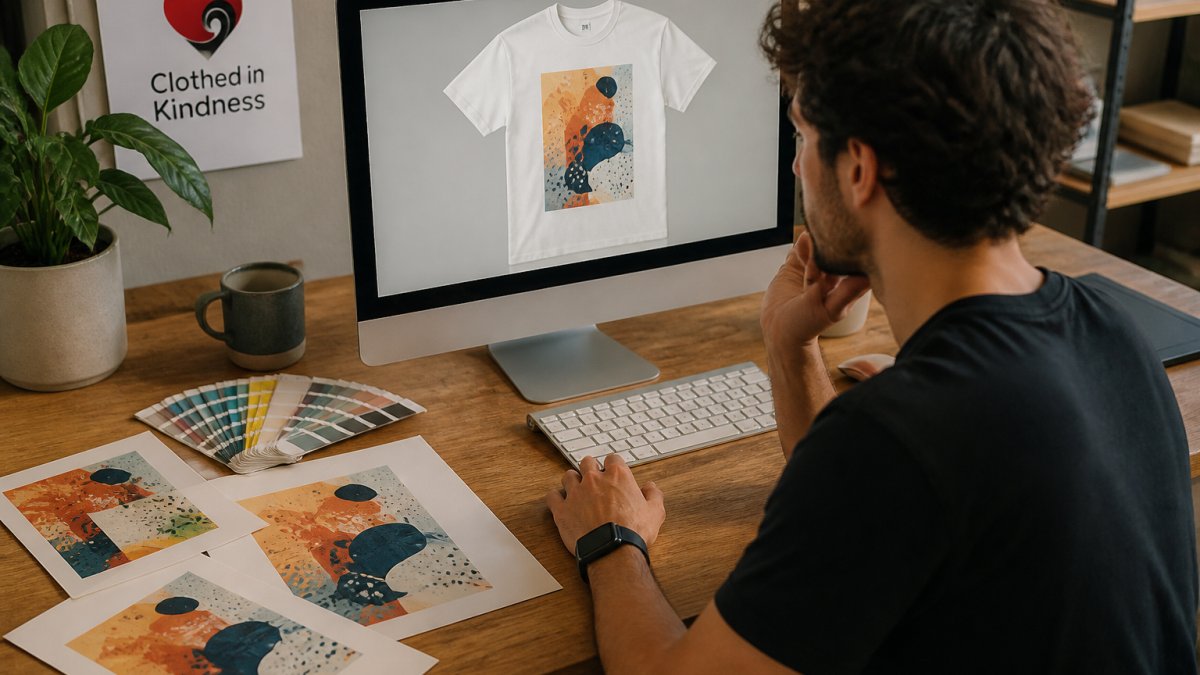
Choosing the Right Garment for Your Design
The garment matters as much as the design. A delicate watercolor painting might disappear on a dark hoodie but shine on a light-colored tee. Bold graphic designs work on nearly any color, while subtle artwork needs contrast to be visible.
Consider these factors:
- Color - light backgrounds make designs pop; dark backgrounds require light-colored ink or transfers
- Fabric weight - heavier fabrics hold detail better; lightweight tees show every texture of the print
- Fit and style - oversized tees give more canvas space; fitted shirts work better for smaller, centered designs
- Neckline and sleeve length - some designs work best on short sleeves, others on long sleeves or across the chest
If your design is intricate, choose a quality blank garment. Cheap tees have uneven fabric that prints poorly. Premium blanks from established suppliers print more consistently.
Uploading and Positioning Your Design
Most print-on-demand services provide mockup tools where you upload your design and see how it looks on the garment. Use this step seriously. Positioning matters. A design that's off-center or too close to a seam looks amateur.
Standard placement for a chest design is 2-3 inches from the neckline and centered horizontally. Full-back designs typically sit 2-3 inches below the collar. Sleeve designs usually land on the upper arm or centered on the chest area of long sleeves.
Upload your design file and position it in the mockup tool. Most services let you adjust size, placement, and rotation. Preview the design from multiple angles if the tool allows it.
Wearable Art Ideas and Inspiration
Wearable art works best when it reflects genuine interests or beliefs. People gravitate toward designs that feel authentic to who they are.
Consider designs that express:
- Personal beliefs and values - faith-inspired artwork, kindness-centered messages, or leadership philosophy
- Humor and nostalgia - retro sayings, funny observations, or designs that make people smile
- Interests and hobbies - coffee culture, fitness pursuits, zodiac signs, seasonal themes, or creative passions
- Original artwork - your own paintings, illustrations, photography, or hand-lettering
- Meaningful moments - family inside jokes, quotes that matter, or designs celebrating life seasons
The strongest wearable art pieces tell a story or spark recognition. Someone wearing a design that reflects their actual life, not a generic trend, stands out. That authenticity is why graphic apparel from brands like Clothed in Kindness Apparel resonates. The designs sound like the people wearing them.
If you're stuck for ideas, start by asking what you'd want to see on a shirt. What makes you laugh? What matters to you? What would you want to remember daily? Your answer is your starting point.
Making Your Design Last: Care and Durability
A beautifully printed design only stays beautiful if it's cared for properly. How you wash and wear the garment directly impacts how long the design lasts.
Wash in cold water and turn the garment inside out to protect the printed design from friction and fading. Avoid bleach and harsh detergents, use gentle, color-safe options.
Avoid washing immediately after receiving a new printed garment. Let the print cure for 24-48 hours first. This allows the ink or transfer to fully set into the fabric.
Different printing methods have different durability profiles:
- Heat transfers - typically last 50-100 washes with proper care
- Direct-to-garment prints - often last 100+ washes because ink bonds with fibers
- Screen prints - can last 200+ washes and are the most durable option
- Vinyl transfers - last 50-75 washes before showing wear
Even the most durable print eventually fades with time and washing. This is normal. Expecting a garment to look identical after two years of regular wear sets unrealistic expectations.
Common Mistakes to Avoid
Choosing the wrong printing method for your design. Screen printing can't handle photographic complexity.
Ignoring fabric compatibility. Polyester behaves differently than cotton under heat. Dark fabrics need different ink than light ones.
Centering everything. A design smack in the middle of the chest looks static.
Skipping the mockup step. Always preview your design on the actual garment before final approval.
Using overly trendy designs. Trends fade. Art that reflects genuine interests stays relevant longer.
Not testing care instructions. If you're printing for yourself, wash a test garment the way you'll actually wash it.
The real work is in the design itself.
Frequently Asked Questions
What file format and resolution do I need to turn art into wearable art?
For printing on apparel, use high-resolution digital files at 300 DPI (dots per inch) minimum. PNG or PDF formats work best because they preserve detail without quality loss. If your artwork is physical, scan it at 300 DPI or higher. Vector files (like AI or EPS) are ideal for scalable designs. Check with your printing service for specific format preferences, as some methods have different requirements.
How do I digitize artwork for printing if I only have a physical drawing?
Scan your artwork at 300 DPI or higher using a scanner or smartphone scanning app. Clean up the image in editing software to remove shadows and adjust contrast. If your design has fine details, consider tracing it in vector software for sharper results. Make sure the file size is large enough that it won't pixelate when printed on your chosen garment size.
What's the best printing method for artwork on clothing?
Heat transfer works well for detailed, colorful designs and is affordable for small batches. Direct-to-garment printing offers vibrant color and durability but works best on light-colored fabrics. Screen printing is economical for large runs and produces long-lasting designs. Choose based on your design complexity, garment color, budget, and how many pieces you're making.
Can I paint directly on clothes and make the design last?
Yes, fabric paint can work, but durability depends on the product and technique. Use high-quality fabric paint designed for apparel, apply it evenly, and follow the manufacturer's curing instructions (usually heat-setting with an iron or dryer). Fabric paint typically lasts through regular washing when applied correctly, though it may fade over time compared to commercial printing methods.
