

Meaningful Graphic Tees: Wear What You Believe in 2026
Table of Contents
- Why Meaningful Graphic Tees Hit Different Than Trend Tees
- Expressive Graphic Apparel: Finding Designs That Sound Like You
- What Separates a Meaningful Graphic Tee From a Disposable One
- How to Style Graphic Tees for Work, Weekends, and Everything Between
- Making Graphic Tees Last: Care Instructions Most People Skip
- Questions Worth Asking About Ethical Production and Transparency
- Conclusion
- Frequently Asked Questions
Last Updated: September 28, 2026
Why Meaningful Graphic Tees Hit Different Than Trend Tees
Meaningful graphic tees are shirts whose message, artwork, or wording carries a point of view the wearer actually holds, rather than a slogan borrowed from whatever sold last season.
A trend tee is a costume. A meaningful one is closer to a sentence you chose to say out loud all day, and that difference shows up in how often a shirt gets worn.
The Psychology of Wearing Your Values
The first is outward: a shirt tells strangers something about you before you speak. Sociologists call this signaling, and it's why band tees and team jerseys have always existed.
The second is inward, and it's the one people underestimate.
Why Some Graphic Tees Get Worn and Others Get Buried
The message has to be true on a bad day. A shirt that only works when you're feeling clever gets worn twice. One that still lands when you're tired and standing in line at the pharmacy keeps earning its spot.
What This Means When You're Actually Shopping
If the psychology is right, the shopping question changes. You're not looking for the best-looking design on a product grid. You're looking for the one that matches something you'd say without being prompted.
Expressive Graphic Apparel: Finding Designs That Sound Like You
Expressive graphic apparel works when the design matches something already true about the wearer, which is why the same shirt can feel perfect on one person and off on another. The search is less about finding the "best" design than recognizing your own.
A few directions people tend to fall into:
- Values-forward: kindness, empathy, grace, patience. Wording like Gather in Kindness or Actions Over Words does the talking without raising its voice.
- Faith-rooted but conversational: You Are Loved and Made to Thrive land as encouragement rather than a sermon, which matters if the shirt is going to work on a Tuesday at the office.
- Humor and nostalgia: retro sayings, coffee humor, seasonal jokes, the kind of shirt that starts a conversation in a checkout line.
- Interest-based: fitness, astrology and zodiac, leadership, family, art. These say "this is a thing I care about" without needing a paragraph.
Typography Tees vs. Artwork Tees: Two Ways to Say the Same Thing
Typography-driven designs put the words in charge. They read as calmer and easier to wear in professional settings, because the eye lands on a phrase rather than an illustration. Calm Clear Kind is a good example: the message does the work, nothing competes with it.


What Separates a Meaningful Graphic Tee From a Disposable One
The difference between a graphic tee you keep for years and one that becomes a rag comes down to fabric weight, print method, and construction. A design can be beautiful and still be gone in ten washes.
Fabric, Fit, and the Details That Decide Longevity
Heavier cotton holds a print better and drapes more cleanly. A 100% ring-spun cotton tee at roughly 6.1 oz/yd², garment-dyed for a softer, lived-in color, behaves very differently from a thin, stiff blank. Garment dyeing also means the color sits in the fabric rather than on top of it, so it fades gradually instead of going patchy.
Construction details matter more than shoppers expect:
| Detail | What It Does | Why It Matters |
|---|---|---|
| Twill-taped neck and shoulders | Reinforces the seams | Prevents the collar from stretching out |
| Double-needle hems | Two rows of stitching at edges | Holds shape through repeated washing |
| 7/8" topstitched collar | Adds structure to the neckline | Keeps the crew neckline from curling |
| Relaxed fit | Room through the body | Comfortable without looking oversized |
How to Style Graphic Tees for Work, Weekends, and Everything Between
Styling a graphic tee well comes down to balancing the message against the rest of the outfit, so the shirt reads as intentional rather than accidental. The shirt is the loudest thing you're wearing. Everything else should support it.
Gather in Kindness — Tee CC 1717 →
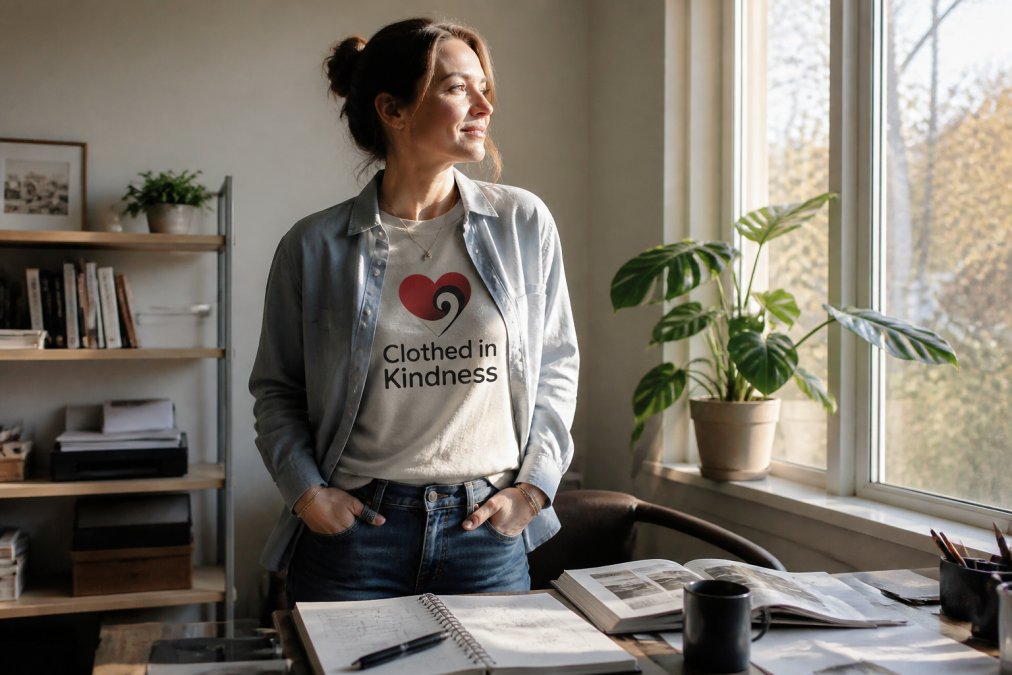
A few practical rules that hold up:
- One message per outfit. Two graphic pieces fight each other.
- Tuck or half-tuck a relaxed tee to define the waist.
- Match the formality of the shoe to the rest of the outfit, not the shirt.
- If the shirt is typography-heavy, keep jewelry simple.
Making Graphic Tees Last: Care Instructions Most People Skip
Washing a graphic tee inside out in cold water and air drying it will do more for print longevity than any other habit. Most print damage comes from heat and abrasion, and both are easy to avoid.
A few more habits worth building:
- Wash graphic tees less often than you think you need to. Spot clean when you can.
- Avoid ironing directly on the print. If you must iron, go inside out on low.
- Store folded rather than hung if the fabric is heavy, since hangers can stretch the shoulders.
- Keep darker garment-dyed tees away from prolonged direct sunlight.
Questions Worth Asking About Ethical Production and Transparency
Transparency in apparel is hard to verify, and that's exactly why it's worth asking about directly. "Eco-friendly" and "ethically made" are marketing phrases, not regulated terms. Any brand can print them on a hangtag. What separates a brand you can hold to something from one you can't is whether the claims come with specifics you could check.
The Questions That Actually Get You Somewhere
Most shoppers ask "is this ethical?" and get a yes. Better questions produce better answers:
- Where are the blank garments sourced? A brand that knows its supply chain can name the mill, the country, or at minimum the supplier relationship. A brand that doesn't will pivot to values language.
- Is the item produced to order or held as inventory? Made-to-order models reduce deadstock and overproduction, which is a real environmental difference, but they also change how sizing works, because there's no warehouse stock to swap.
- What does the sizing actually measure, in inches, per size? A published size chart with real measurements is a transparency signal. "Runs small, size up" is not.
- What's the fabric weight and content? Ounces per square yard and fiber composition are objective facts. Brands that publish them are usually brands that know their product.
- What happens if the fit is wrong? The answer should be specific and written down, not improvised in a chat window.
What CIK Actually Publishes
Clothed in Kindness Apparel lists fabric content, fabric weight, and a full measurement-based size guide on each product page, and its apparel is produced to order. Because each piece is made when it's ordered rather than pulled from a shelf, checking the size guide before ordering matters more than with a mass-produced shirt. Measure a tee you already own, lay it flat, and compare chest width and body length against the chart.
How to Verify a Transparency Claim Yourself
Look for the specifics, not the adjectives. "Made with organic cotton" is a claim. "100% organic cotton, GOTS-certified, mill listed on the product page" is a claim you can check. The Federal Trade Commission's guidance on environmental marketing claims, the Green Guides, explains what advertisers are and aren't allowed to imply, and it's a useful lens for reading any apparel label critically.
The Honest Version
Perfect transparency in apparel is rare, and any brand claiming otherwise is probably overselling. What's achievable is specificity: real measurements, real fabric specs, real answers to direct questions, and a willingness to say "we don't make that claim" instead of borrowing language from brands that do. That's a lower bar than most marketing implies, and a more useful one to shop against.
Conclusion
The gap between a shirt you wear twice and a shirt you wear for years usually comes down to whether the message is actually yours and whether the garment was built to hold up. Both are checkable before you buy.
Frequently Asked Questions
What makes a graphic tee feel personal or meaningful?
A meaningful graphic tee connects to something you actually care about: a value, a reminder, a bit of humor, a season of life. The phrase or artwork should feel like something you would say out loud. Typography, color, and fit matter too, because a design you love on a shirt that fits well gets worn constantly, while one that fits poorly stays in the drawer.
Are graphic tees still in style in 2026?
Yes. Graphic tees have moved from trend item to wardrobe staple, and the shift favors designs with substance over novelty prints. Message-driven and typography-based tees keep showing up because they work with layering, denim, and casual wear. The styles that fade fastest tend to be joke-of-the-moment prints; the ones that last are the ones tied to something you will still believe next year.
How do I keep the print on a graphic tee from cracking?
Wash the tee inside out in cold water on a gentle cycle, and skip the dryer when you can. Heat is what breaks down printed graphics over time. If you do tumble dry, use low heat. Avoid ironing directly over the design, and never bleach a printed tee. These habits cost you nothing and add real wear to any meaningful graphic tee you plan to keep.
What should I look for when choosing high-quality graphic apparel?
Check the fabric weight and content first. A heavyweight ring-spun cotton tee holds its shape and structure better than a thin blend, and details like double-needle stitching and twill-taped shoulders signal a garment built to last. Review the sizing chart for the specific shirt before ordering, since fits vary by garment. If a brand will not tell you where its blanks come from, treat that as a signal.